
How to Remove the Motor Lid (Cowling) on your Suzuki Outboard
Post Author:
Salty Bob
Last Updated:
April 30, 2026
Share This:
How to Remove the Motor Lid (Cowling) on your Suzuki Outboard
Post Author:
Last Updated:
Salty Bob
April 30, 2026
How to Remove the Motor Lid (Cowling) on your Suzuki Outboard
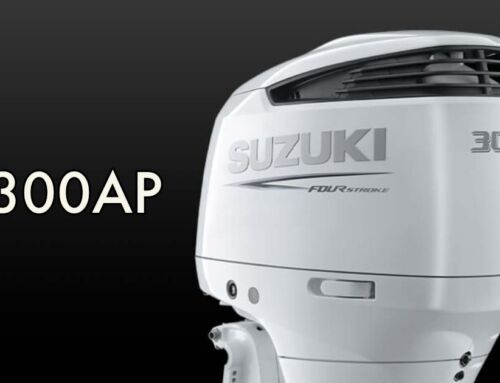
Whether you are performing a quick oil level check before heading out into the Gulf or simply want to inspect your engine after a long weekend on the water, knowing how to properly remove your cowling (motor lid) is essential. For the latest 2025 and 2026 Suzuki models, the design is sleeker and more secure than ever, but the removal process remains straightforward once you know where to look.
Suzuki outboards in the 40hp to 350hp range utilize high-quality seals to keep moisture out, which can sometimes make the lid feel “stuck” if it hasn’t been moved in a while. Here is how to handle the latest models.
.
.
The SWFL Factor: How Local Weather Impacts Your Cowling
In Southwest Florida, our environment is notoriously tough on marine hardware. The combination of intense 90-degree heat and high humidity can cause the rubber gaskets on your Suzuki to expand and “bake” onto the fiberglass lid.
Furthermore, salt air creates a fine brine that acts like an adhesive over time. If you haven’t removed your motor lid in a few months, the seal often becomes pressurized or stuck. Regularly popping the lid, even if you don’t need to work on the engine, is a vital maintenance step here in Fort Myers to ensure you aren’t fighting a seized cowling when you actually need to get inside.
Note on the “Thump” method: If the weather has caused that seal to stick, remember to use the “heel of the hand” strike on the rear air intake. This breaks the suction caused by the Florida humidity without damaging the paint or the latching mechanism.
.
.
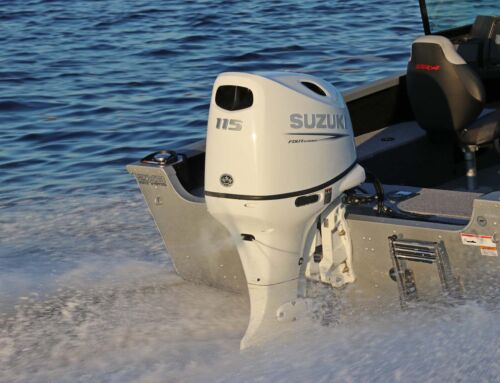
Mid-Range Models (40hp – 140hp)
For most mid-range models, Suzuki utilizes a simple lever system.
• Locate the Lever: On 2025 and 2026 models, look for a single recessed lever located at the rear of the engine, just below the cowling line.
• Release: Pull the lever outward and upward. This unhooks the rear catch.
• Lift and Tilt: Grip the back of the cowling and lift it up slightly. As it clears the rear seal, slide the cowling forward just an inch or two to release the front hook from its seat.
• Pro Tip: If the lid feels stuck, do not pry it with a tool. The rubber gasket may have formed a suction seal; a firm upward “thump” with the heel of your hand on the rear air intake area usually breaks the seal safely
.
.
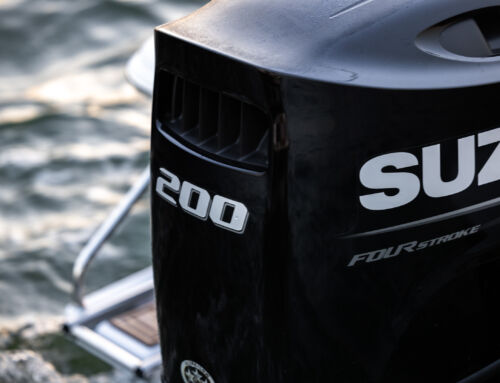
High-Performance Models (150hp – 350hp)
The larger 2025 and 2026 inline-4 and V6 models often feature a more robust multi-point latching system to ensure a tight seal at higher speeds.
• Identify the Latches: On many large-displacement models, you will find three distinct latches, typically one at the rear and one on each side toward the front.
• The “Lift and Rotate” Method: Modern Suzuki latches often require you to lift the handle and then rotate it to fully disengage the internal hook.
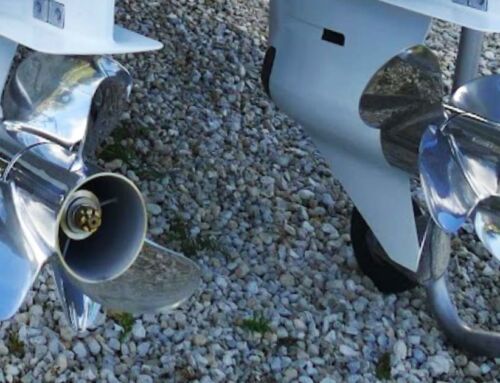
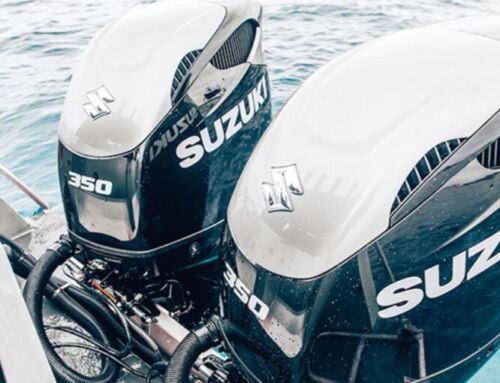
• Two-Person Lift: Especially with the 300hp and 350hp dual-prop models, the cowling is substantial. We recommend having a second person assist you to lift it straight up and back to avoid scratching the motor’s finish or damaging the internal components.
.
.
Quick Maintenance Tips
- Inspect the Seal: Once the lid is off, check the rubber gasket for any salt buildup or tears.
- Silicone Grease: Applying a very light coat of marine-grade silicone grease to the cowling seal once a season will make future removals much easier.
- Avoid the Ground: Never set your cowling down on a dock or concrete. The paint on these newer models is high-end; always place it on a soft towel or a dedicated stand.
If you find that your cowling is truly seized or if you notice anything unusual under the hood while performing your check, don’t hesitate to reach out. At The Boat Place in Fort Myers, we have been serving the Southwest Florida boating community for over 30 years. Our team of Suzuki-certified, factory-trained technicians excels in 5-star outboard service, ensuring your motor stays in peak condition for years to come. Give us a call today!
.
.
How to Remove the Motor Lid (Cowling) on your Suzuki Outboard
Whether you are performing a quick oil level check before heading out into the Gulf or simply want to inspect your engine after a long weekend on the water, knowing how to properly remove your cowling (motor lid) is essential. For the latest 2025 and 2026 Suzuki models, the design is sleeker and more secure than ever, but the removal process remains straightforward once you know where to look.
Suzuki outboards in the 40hp to 350hp range utilize high-quality seals to keep moisture out, which can sometimes make the lid feel “stuck” if it hasn’t been moved in a while. Here is how to handle the latest models.
.
.
The SWFL Factor: How Local Weather Impacts Your Cowling
In Southwest Florida, our environment is notoriously tough on marine hardware. The combination of intense 90-degree heat and high humidity can cause the rubber gaskets on your Suzuki to expand and “bake” onto the fiberglass lid.
Furthermore, salt air creates a fine brine that acts like an adhesive over time. If you haven’t removed your motor lid in a few months, the seal often becomes pressurized or stuck. Regularly popping the lid, even if you don’t need to work on the engine, is a vital maintenance step here in Fort Myers to ensure you aren’t fighting a seized cowling when you actually need to get inside.
Note on the “Thump” method: If the weather has caused that seal to stick, remember to use the “heel of the hand” strike on the rear air intake. This breaks the suction caused by the Florida humidity without damaging the paint or the latching mechanism.
.
.
Mid-Range Models (40hp – 140hp)
For most mid-range models, Suzuki utilizes a simple lever system.
• Locate the Lever: On 2025 and 2026 models, look for a single recessed lever located at the rear of the engine, just below the cowling line.
• Release: Pull the lever outward and upward. This unhooks the rear catch.
• Lift and Tilt: Grip the back of the cowling and lift it up slightly. As it clears the rear seal, slide the cowling forward just an inch or two to release the front hook from its seat.
• Pro Tip: If the lid feels stuck, do not pry it with a tool. The rubber gasket may have formed a suction seal; a firm upward “thump” with the heel of your hand on the rear air intake area usually breaks the seal safely
.
.
High-Performance Models (150hp – 350hp)
The larger 2025 and 2026 inline-4 and V6 models often feature a more robust multi-point latching system to ensure a tight seal at higher speeds.
• Identify the Latches: On many large-displacement models, you will find three distinct latches, typically one at the rear and one on each side toward the front.
• The “Lift and Rotate” Method: Modern Suzuki latches often require you to lift the handle and then rotate it to fully disengage the internal hook.
• Two-Person Lift: Especially with the 300hp and 350hp dual-prop models, the cowling is substantial. We recommend having a second person assist you to lift it straight up and back to avoid scratching the motor’s finish or damaging the internal components.
.
.
Quick Maintenance Tips
- Inspect the Seal: Once the lid is off, check the rubber gasket for any salt buildup or tears.
- Silicone Grease: Applying a very light coat of marine-grade silicone grease to the cowling seal once a season will make future removals much easier.
- Avoid the Ground: Never set your cowling down on a dock or concrete. The paint on these newer models is high-end; always place it on a soft towel or a dedicated stand.
If you find that your cowling is truly seized or if you notice anything unusual under the hood while performing your check, don’t hesitate to reach out. At The Boat Place in Fort Myers, we have been serving the Southwest Florida boating community for over 30 years. Our team of Suzuki-certified, factory-trained technicians excels in 5-star outboard service, ensuring your motor stays in peak condition for years to come. Give us a call today!
.
.